



Amino Acid Decarboxylase
Amino Acid Decarboxylase
Amino acid decarboxylases are a class of enzymes that catalyze the removal of the carboxyl group from specific amino acids to produce biologically active amines. These enzymes are widely involved in various physiological processes, particularly in the synthesis of neurotransmitters and polyamines. Aromatic L-amino acid decarboxylase (AADC), histidine decarboxylase (HDC), and S-adenosylmethionine decarboxylase (SAMDC) all belong to the amino acid decarboxylase family, each playing an important role in different metabolic pathways to regulate cellular functions.
AADC is primarily responsible for converting aromatic amino acid precursors l-DOPA and 5-hydroxytryptophan into the neurotransmitters dopamine and serotonin. These neurotransmitters are crucial for the normal functioning of the brain, and AADC deficiency leads to severe neurological disorders, including motor dysfunction, autonomic nervous system dysfunction, and behavioral abnormalities.
HDC catalyzes the conversion of histidine to histamine. Histamine is an important mediator in allergic and inflammatory reactions, and a deficiency in HDC is closely related to immune dysfunction and allergic symptoms. For example, in some chronic inflammation and allergic reactions, the upregulation of HDC plays a crucial role in regulating histamine levels and immune cell function.
SAMDC is a key enzyme in the polyamine biosynthetic pathway, responsible for converting S-adenosylmethionine into decarboxylated S-adenosylmethionine, a precursor for the synthesis of spermidine and spermine. These polyamines play vital roles in cell growth, differentiation, and proliferation. The activity of SAMDC is closely related to the cellular concentration of polyamines, and SAMDC inhibitors are widely studied for anticancer and antiparasitic treatments.
Inhibitors targeting amino acid decarboxylases have potential applications in cancer and parasitic disease research. For example, since the polyamine biosynthetic pathway is upregulated in many tumors, SAMDC inhibitors can be used in cancer research, and SAMDC inhibitors are also important tools in antiparasitic research[1][2][3][4].
References:
- [1]. Han SW, et al. Aromatic L-amino acid decarboxylases: mechanistic features and microbial applications. Appl Microbiol Biotechnol. 2022 Jun;106(12):4445-4458. [Content Brief]
- [2]. Aromatic L-Amino Acid Decarboxylase - an overview.
- [3]. Hirasawa N. Expression of histidine decarboxylase and its roles in inflammation[J]. International Journal of Molecular Sciences, 2019, 20(2): 376.
- [4]. Bale S, et al. Structural biology of S-adenosylmethionine decarboxylase. Amino Acids. 2010 Feb;38(2):451-60. [Content Brief]
All Product Categories
-
Amino Acid Decarboxylase Related Products (17)
Related Products (17)

- 1
-
(Z)-Aconitic acid
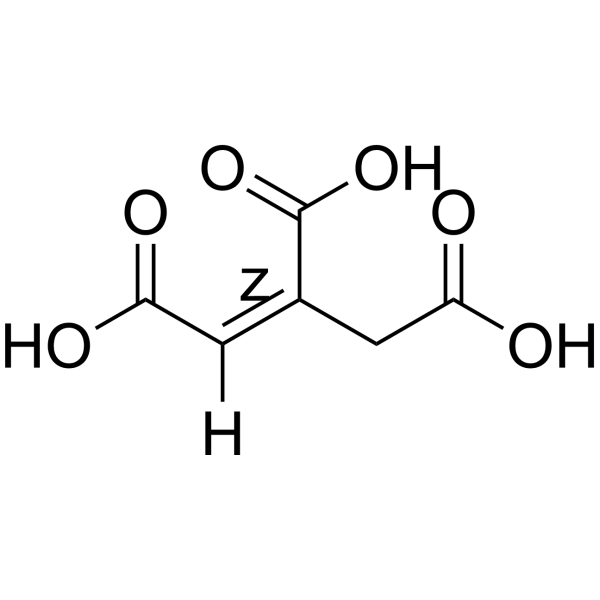 0 ImagesSynonyms: cis-Aconitic acid
-
DL-Allylglycine
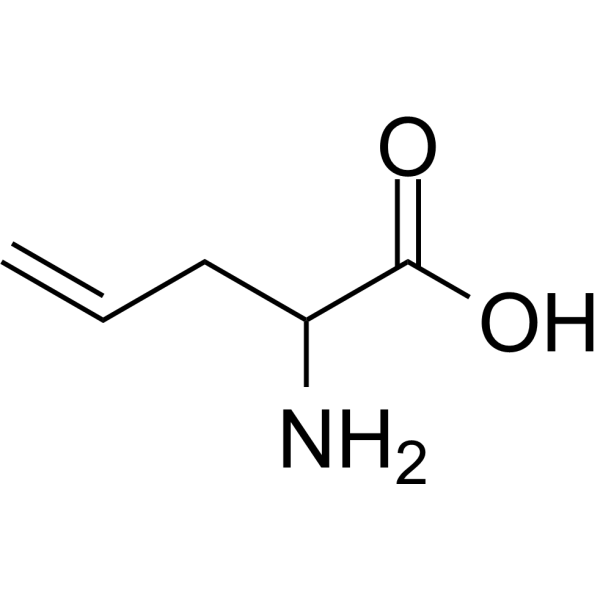 0 ImagesSynonyms: 2-Aminopent-4-enoic acidDL-Allylglycine (2-Aminopent-4-enoic acid) is a glutamate decarboxylase (GAD) inhibitor. DL-Allylglycine significantly increases mouse brain ornithine decarboxylase (ODC) activity and decreases S-adenosyl-L-methionine decarboxylase (SAM-DC) activity. DL-Allylglycine causes a marked decrease in brain GABA concentration. DL-Allylglycine has convulsant activity that can be used in studies to induce epileptic seizures.
-
L-Allylglycine
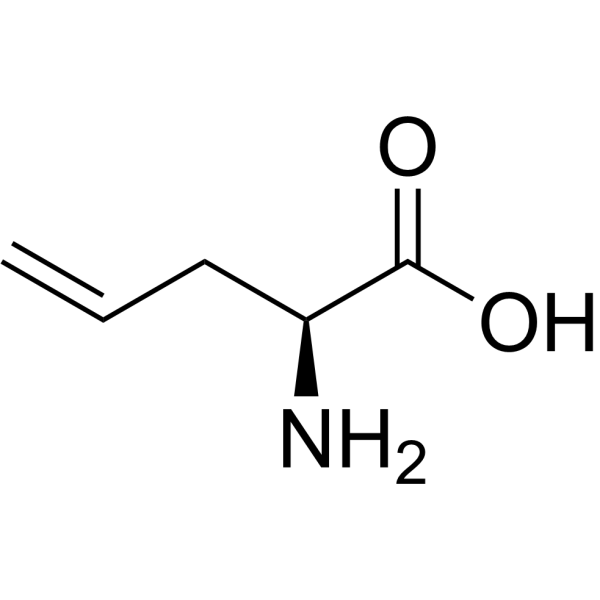 0 ImagesSynonyms: L-2-AllylglycineL-Allylglycine (L-2-Allylglycine) is an amino acid derivative. L-Allylglycine is an inhibitor for glutamate decarboxylase (GAD) that reduces the GABA biosynthesis in the brain. L-Allylglycine exhibits convulsant activity.
-
Chelidamic acid
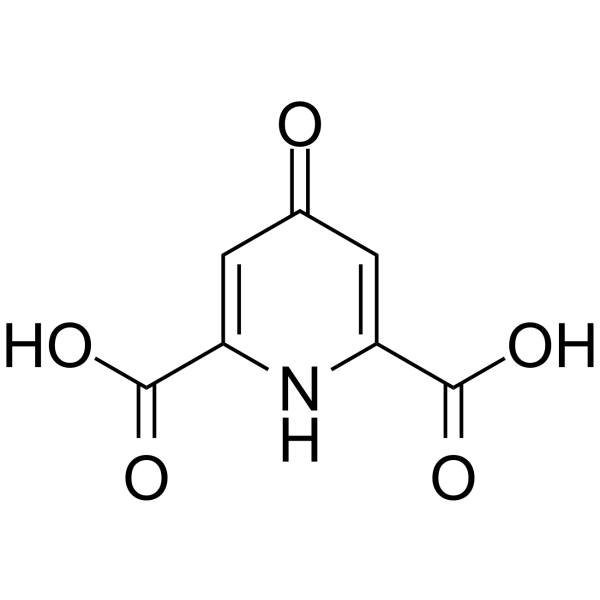 0 ImagesChelidamic acid is a heterocyclic organic acid with a pyran skeleton. Chelidamic acid has good coordination ability with noble metal ions. Chelidamic acid is also one of the most potent inhibitors of glutamate decarboxylase, with a Ki of 33 μM.
-
L-Allylglycine hydrochloride
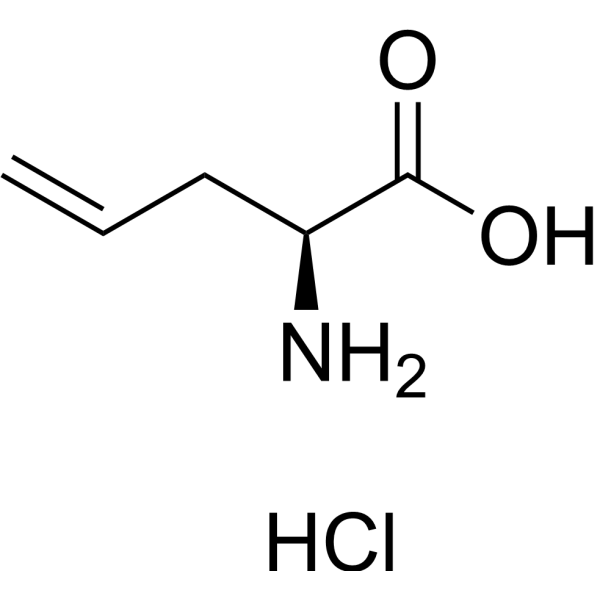 0 ImagesSynonyms: L-2-Allylglycine hydrochlorideL-Allylglycine (L-2-Allylglycine) hydrochloride is an amino acid derivative. L-Allylglycine hydrochloride is an inhibitor for glutamate decarboxylase (GAD) that reduces the GABA biosynthesis in the brain. L-Allylglycine hydrochloride exhibits convulsant activity.
-
α-Fluoromethylhistidine dihydrochloride
 0 Imagesα-Fluoromethylhistidine dihydrochloride is an orally active histidine decarboxylase inhibitor. α-Fluoromethylhistidine dihydrochloride depletes histamine in enterochromaffin-like (ECL) cells, reduces the number and volume density of secretory vesicles in ECL cells, and does not affect histamine storage in mast cells. α-Fluoromethylhistidine dihydrochloride abolishes Omeprazole (HY-B0113)-induced vacuolization of ECL cells and decreases gastrin-induced histamine efflux from ECL cells. α-Fluoromethylhistidine dihydrochloride does not alter the granular characteristics of ECL cells, omeprazole-induced hypertrophy of ECL cells, gastrin-induced pancreastatin-like immunoreactivity efflux, nor does it affect gastric acid secretion induced by histamine or vagal stimulation. α-Fluoromethylhistidine dihydrochloride inhibits basal and gastrin-stimulated gastric acid secretion, reduces acid output induced by gastrin+IBMX (HY-12318), but does not directly affect acid generation in isolated parietal cells.
-
Qc1
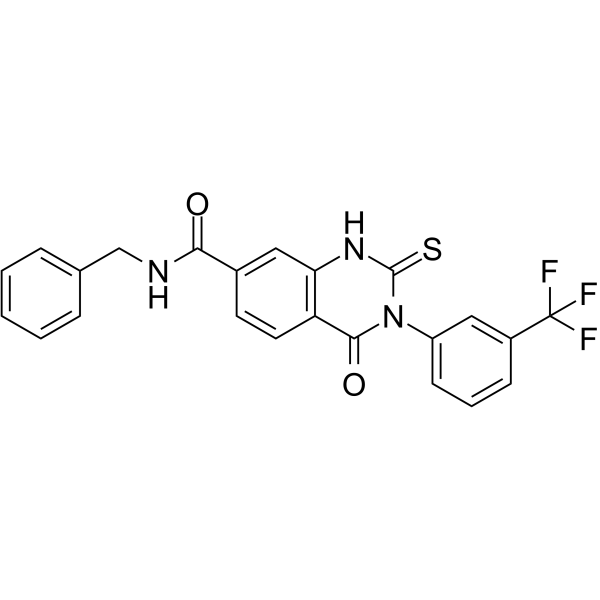 0 ImagesQc1 is a reversible and noncompetitive threonine dehydrogenase (TDH) inhibitor. Qc1 can be used for the research of Metabolic disease.
-
TES-991
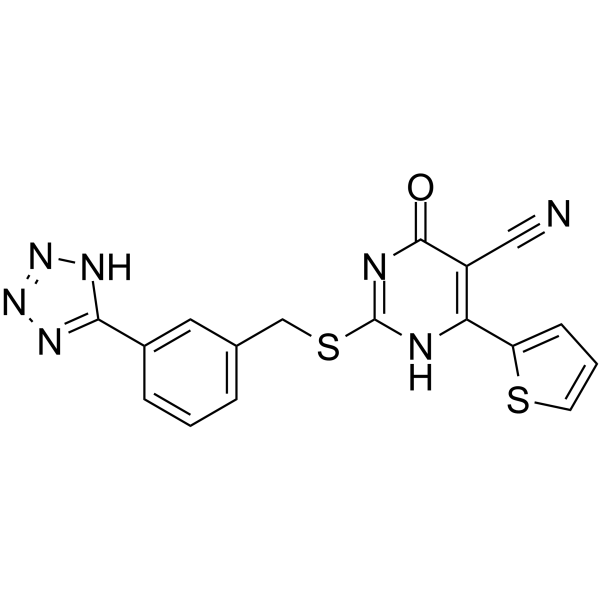 0 ImagesTES-991 is a potent and selective human α Amino-β-carboxymuconate-ε-semialdehyde Decarboxylase (ACMSD) inhibitor, with an IC50 of 3 nM.
-
GAD65 (524-543) acetate
 0 ImagesCat. No.: HY-P5396APurity: 98.08%GAD65 (524-543) acetate is a biological active peptide with amino acids 524 to 543 fragment of glutamic acid decarboxylase 65 (GAD65). GAD65 (524-543) acetate is one of the first fragments of the islet antigen to induce proliferative T cell responses in the non-obese diabetic (NOD) mouse model of spontaneous autoimmune diabetes. GAD65 (524-543) acetate is a specific, possibly low affinity, stimulus for the spontaneously arising diabetogenic T cell clone BDC2.5. Immunization with GAD65 (524-543) acetate increases the susceptibility of the NOD mice to type 1 diabetes induced by the adoptive transfer of BDC2.5 T cells.
-
α-FMH
 0 ImagesCat. No.: HY-W1015419CAS No.: 73804-75-8Synonyms: α-Fluoromethylhistidineα-FMH (α-Fluoromethylhistidine) is an orally active histidine decarboxylase inhibitor. α-FMH depletes histamine in enterochromaffin-like (ECL) cells, reduces the number and volume density of secretory vesicles in ECL cells, and does not affect histamine storage in mast cells. α-FMH abolishes Omeprazole (HY-B0113)-induced vacuolization of ECL cells and decreases gastrin-induced histamine efflux from ECL cells. α-FMH does not alter the granular characteristics of ECL cells, omeprazole-induced hypertrophy of ECL cells, gastrin-induced pancreastatin-like immunoreactivity efflux, nor does it affect gastric acid secretion induced by histamine or vagal stimulation. α-FMH inhibits basal and gastrin-stimulated gastric acid secretion, reduces acid output induced by gastrin+IBMX (HY-12318), but does not directly affect acid generation in isolated parietal cells.
-
Flutroline
 0 ImagesCat. No.: HY-123139CAS No.: 70801-02-4Synonyms: CP-36584Flutroline (CP-36584), a tetrahydro-7-carboline compound, is an orally active and potent anti-psychotic compound.
-
L-Phenylalanine decarboxylase, Streptococcus faecalis
 0 ImagesCat. No.: HY-E70939L-Phenylalanine decarboxylase, Streptococcus faecalis (EC 4.1.1.53) belongs to the lyase family and is capable of cleaving carbon-carbon bonds. L-Phenylalanine decarboxylase, Streptococcus faecalis is involved in the metabolism of phenylalanine. This enzyme has one substrate, L-phenylalanine, and two products: phenylethylamine and CO2.
-
Tritoqualine
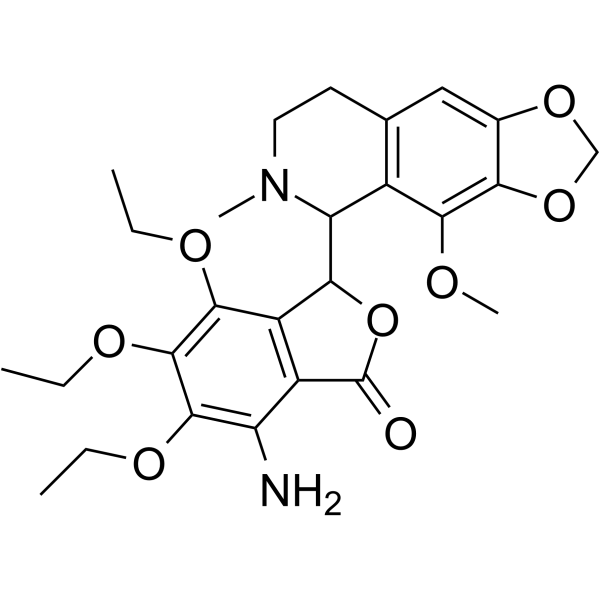 0 ImagesCat. No.: HY-U00065CAS No.: 14504-73-5Synonyms: Inhibostamin; HypostamineTritoqualine is a histidine decarboxylase inhibitor, that inhibits the release of histidine.
-
GAD65 (524-543)
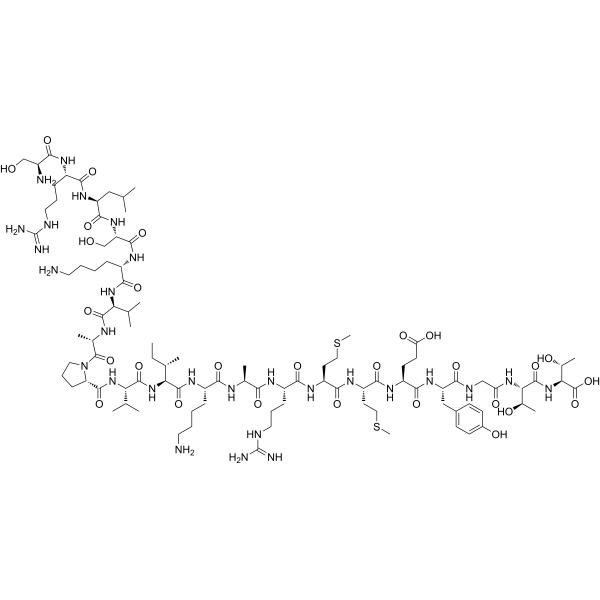 0 ImagesCat. No.: HY-P5396CAS No.: 152468-44-5GAD65 (524-543) is a biological active peptide with amino acids 524 to 543 fragment of glutamic acid decarboxylase 65 (GAD65). GAD65 (524-543) is one of the first fragments of islet antigen to induce proliferative T cell responses in the non-obese diabetic (NOD) mouse model of spontaneous autoimmune diabetes. GAD65 (524-543) is a specific, possibly low affinity, stimulus for the spontaneously arising diabetogenic T cell clone BDC2.5. Immunization with GAD65 (524-543) increases the susceptibility of the NOD mice to type 1 diabetes induced by the adoptive transfer of BDC2.5 T cells.
-
NSD 1034
 0 ImagesNSD 1034 is a potent inhibitor of aromatic L-amino acid decarboxylase (AADC) and tyrosine aminotransferase (TAT), with IC50 values of 0.32 μM and 80 μM, respectively. NSD 1034 increases dopamine synthesis and release by inhibiting AADC and TAT, and stimulating tyrosine hydroxylase in dopaminergic neurons via calcium influx in a classical dopamine receptor-independent manner. NSD 1034 is used in studies of Parkinson's disease and sleep disorders.
-
Qc1 (Standard)
 0 ImagesCat. No.: HY-103391RCAS No.: 403718-45-6
-
Anti-GAD65 Antibody
 0 ImagesCat. No.: HY-P990419Purity: 99.42%Anti-GAD65 Antibody is a humanized antibody expressed in CHO cells that targets GAD65. The Anti-GAD65 Antibody has a huIgG1 heavy chain and a huλ light chain, with a predicted molecular weight (MW) of 146.48 kDa. The isotype control for Anti-GAD65 Antibody can refer to Human IgG1 lambda, Isotype Control (HY-P99992).
- 1



